Learning From Wild Horses
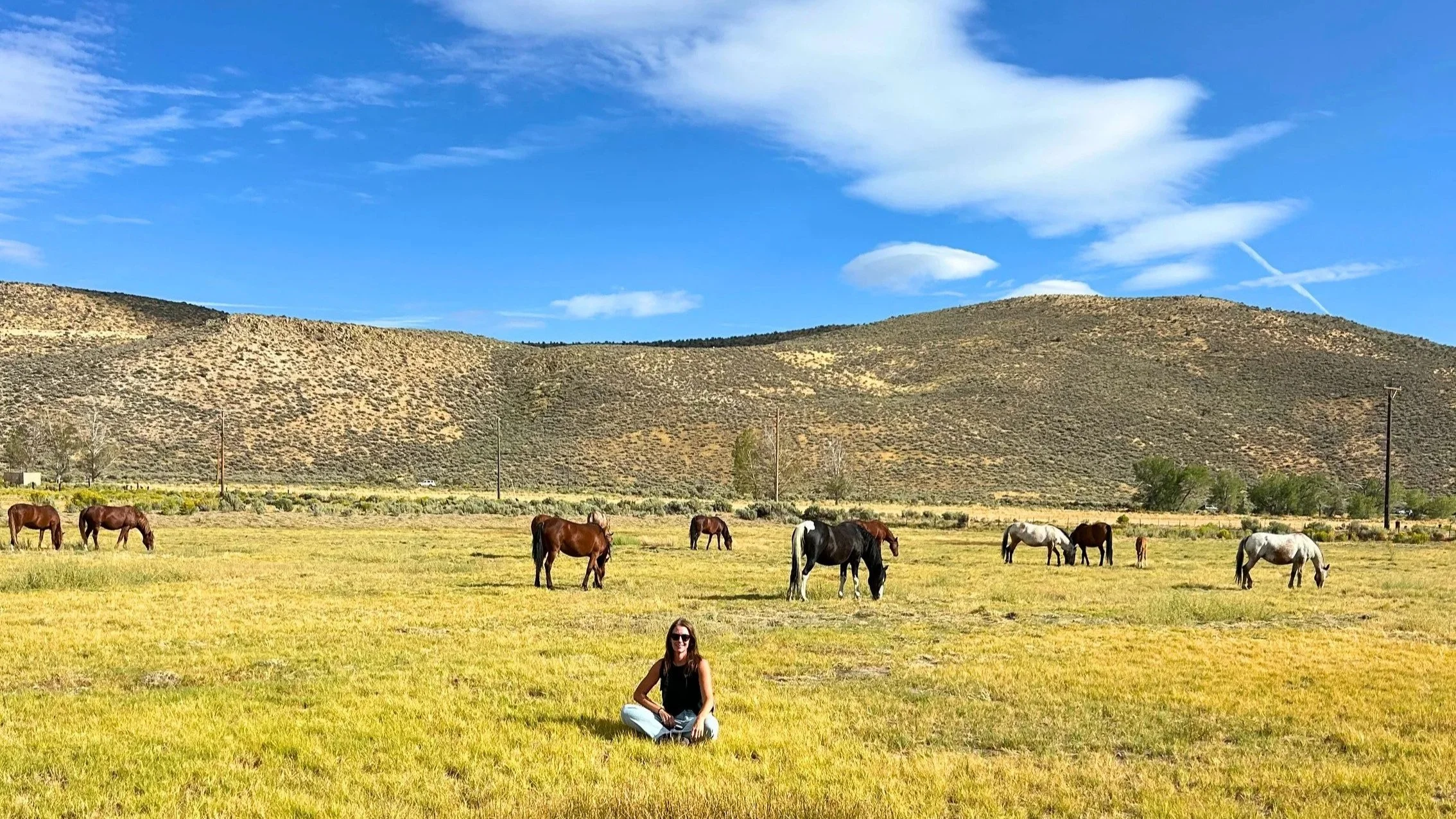
I went to Nevada hoping to understand how horses live when humans are not there to manage them. What I witnessed challenged some of what I thought I knew about horses, and left me thinking differently about freedom, belonging, leadership, conflict, and what it means to simply be present.
I spent the first half of my life learning how to get horses to do what I wanted them to do. I showed horses and trained horses. I asked them to move faster or slower, carry their heads differently, stay collected, stay clean, stay controlled.
I remember keeping my show horses separated from other horses because I did not want them scratched or marked before entering the show ring. They needed to look perfect. There were spurs when a horse did not want to move forward, sharper bits when I wanted more control or a particular position of the head, and pressure applied until I got the response I was looking for. The list of ways I learned to manipulate a horse's body and behavior in the name of training is long.
I do not say this with shame. I loved horses then, just as I love them now. I was doing what I had been taught to do. I understood horses through the culture and language available to me at the time.
But my understanding has changed.
For roughly the past ten years, horses have not been part of my everyday life in the way they once were. When they came back into my life through equine-assisted coaching, I met them differently. Less as animals to train and more as beings to listen to.
Recently, I became curious about a question that felt almost embarrassingly simple for someone who had spent so much of her life around horses. Who are horses when we are not there? Who are they without halters, stalls, arenas, fences and humans determining where they should go? Who leads and who follows? How do they handle disagreement? How do they care for their young? What does belonging look like when no one is forcing anyone to stay?
And perhaps the question I was most interested in as a coach was this:
What does presence look like when there is absolutely nothing to accomplish?
So I went to Nevada.
Meeting the Wild Herd
For three days, my husband Ryan and I spent time observing free-roaming horses of the Virginia Range. I chose the area intentionally. I had learned that the Virginia Range is home to thousands of horses spread across nearly 300,000 acres, making the odds of finding horses considerably better than in many other places.
Still, I knew there were no guarantees. We could spend three days searching the range and never find a single horse.
Through the American Wild Horse Conservation organization, we were fortunate enough to meet someone who knew the range and the horses well. And on our first day, there they were.
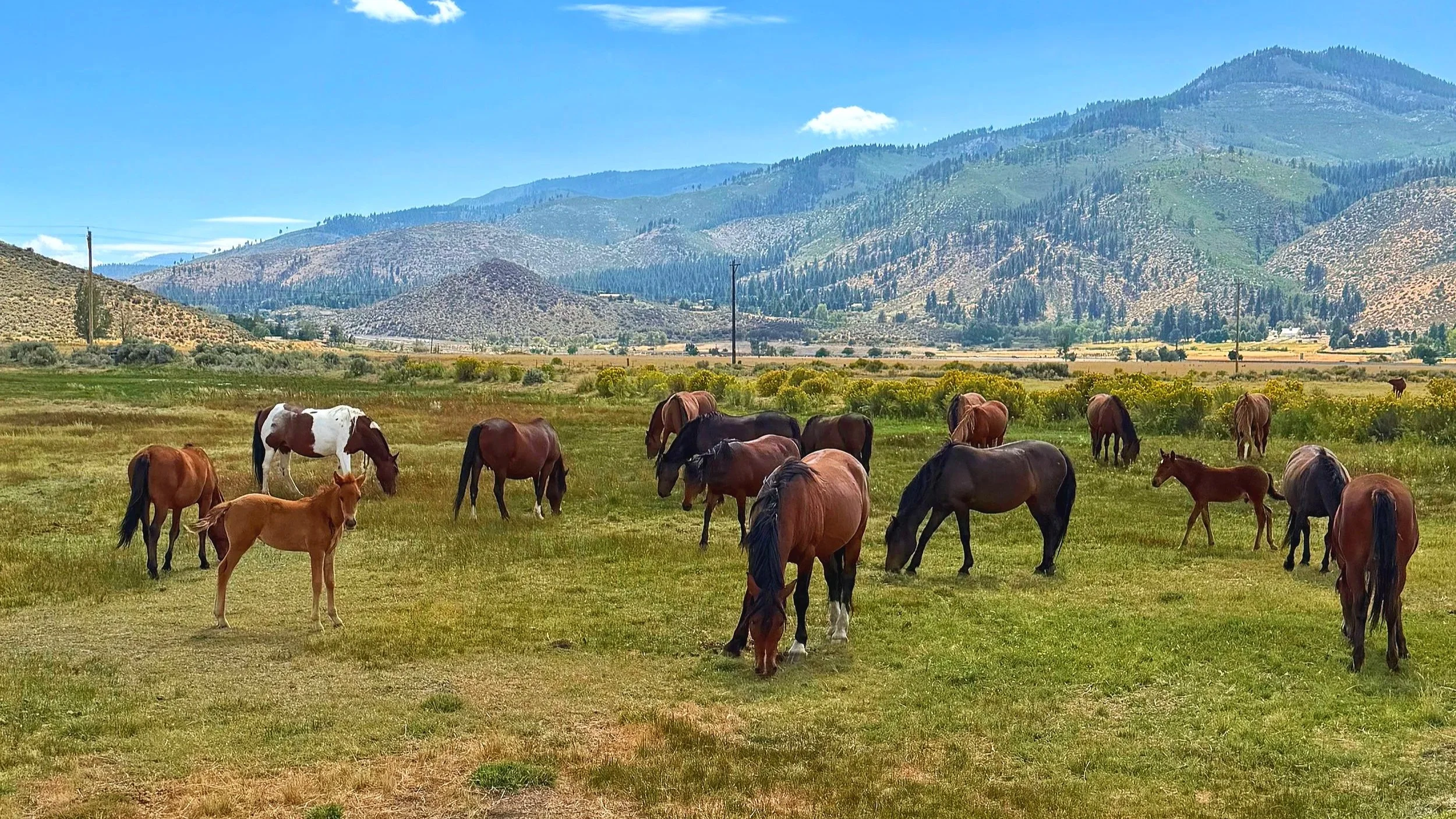
More than forty horses gathered in several bands.
I could not believe what I was seeing. After all the planning, all the hoping, and knowing we could have come all this way and found nothing, suddenly there were horses everywhere.
I stopped talking and simply stood there looking at them.
Awe is probably the closest word I have for what I felt. Awe, and an overwhelming sense of gratitude that I had somehow been given the opportunity to witness this.
For a moment, I felt as though I had stepped into a National Geographic documentary. Mares quietly grazed while foals wandered through the landscape. Stallions watched one another from a distance. Some horses slept while others ate. There was movement everywhere, and yet the herd felt remarkably peaceful.
Until it wasn't.
Two stallions would notice one another, and their bodies changed first. A lowered head. Pawing at the earth. An unmistakable increase in energy. Then, almost instantly, an explosion of rearing, biting, striking and squealing.
The encounters looked violent through my domesticated-horse eyes. And then, often within a minute or two, they were over. One stallion moved away. The horses settled. Grazing resumed. There appeared to be no need to keep the argument alive.
I found myself thinking about how different humans can be. We can replay a conversation for days, weeks, even years. We can continue fighting with someone who is no longer even in the room.
The horses seemed to demonstrate something much simpler. Something happened. It was addressed. And then life continued.
I am careful not to turn every horse behavior into a human lesson. Horses are not humans, and part of what this experience reminded me is how often we place our own stories onto them. Still, as a coach, I could not help noticing what arose in me as I watched.
Conflict did not automatically mean disconnection. It was simply part of the relationship.
The Mothers
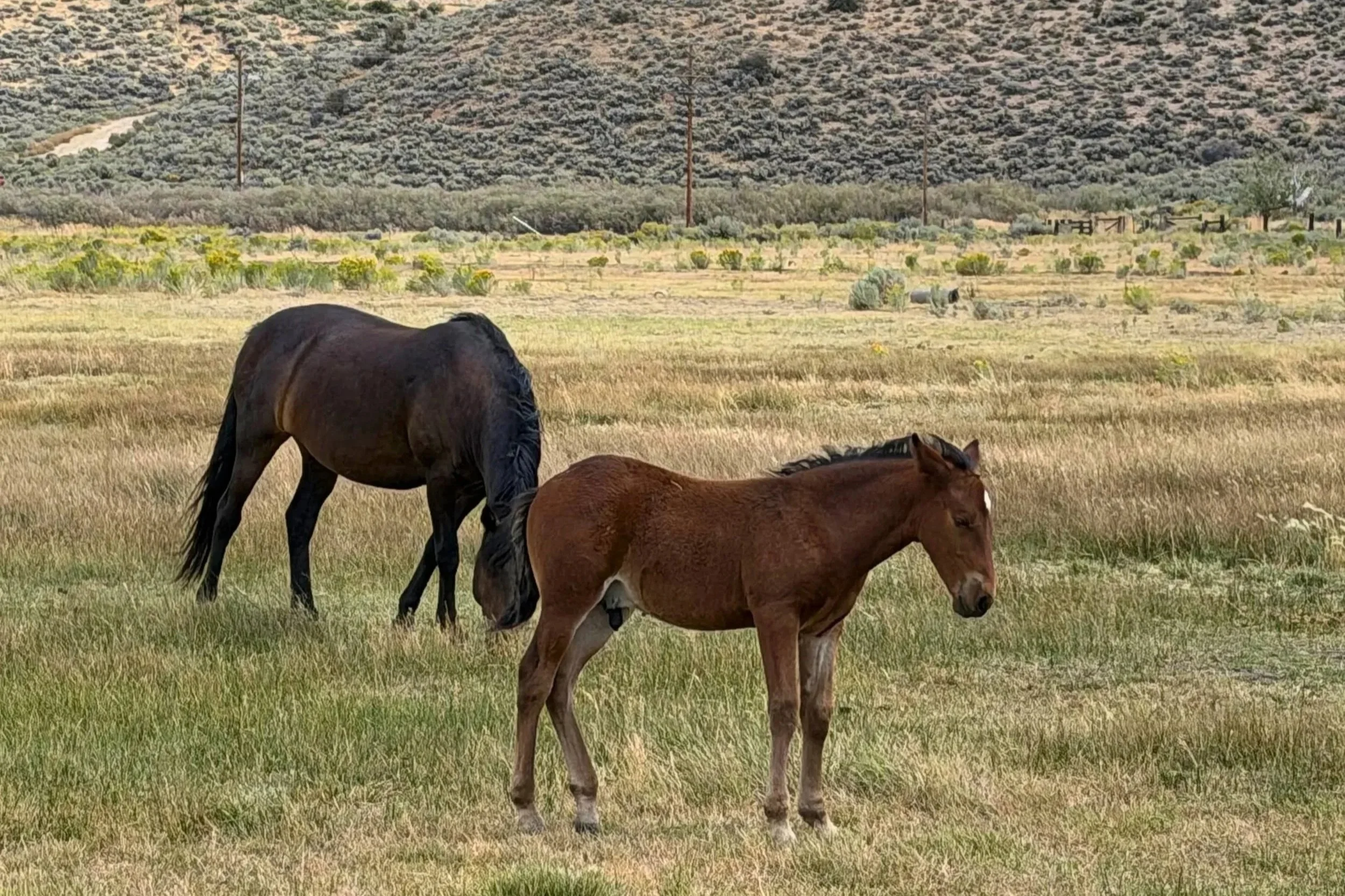
The foals surprised me even more. I expected babies to remain close to their mothers, but they did not. At times they were so far apart that I could not determine which foal belonged to which mare.
One little foal was lying quietly in a patch of bushes, almost completely hidden. I did not even know it was there until I saw its tail begin to flick at the flies. Its mother was nowhere beside it, and yet the foal was not alone.
It was inside the herd.
That distinction stayed with me.
We often think closeness is evidence of connection. We want the people we love nearby. We want reassurance, contact, some evidence that we are still important to one another.
The horses showed me another possibility. Perhaps belonging does not require constant proximity. Perhaps safety can exist without touching. Perhaps connection can remain intact even when there is space between us.
The foals moved with remarkable independence within the larger protection of the herd. They explored, rested and wandered while the mares grazed or slept. They were not always physically close, but they were never truly separate. They belonged to something larger.
As a woman who has spent years studying coaching, relationships, nervous systems and human behavior, that image has stayed with me: a little horse asleep in the brush, not clinging, not abandoned, but belonging.
Perhaps belonging does not require constant proximity.
Who Leads?
I also came to Nevada curious about leadership. I expected the stallions to lead, and sometimes they did move their bands. Particularly when another stallion came near, a stallion would position himself and move his mares away from potential competition. There was protection in that role.
But when the horses simply wanted to go somewhere else, I often saw something different. A mare would begin walking, perhaps across a dirt mound toward a patch of different grass, and the others would follow.
There was no dramatic display. No demand for obedience. She simply knew where she wanted to go, and she went.
We often equate leadership with authority, with the loudest voice, the person with the title, or the one who controls where everyone else goes.
But leadership can also look like quietly seeing a direction and beginning to walk toward it. Others may follow because they trust what you see.
Beautiful, Scarred Bodies
The stallions were covered in scars. Some carried fresh wounds from fighting, and it was difficult not to compare them with the show horses of my younger years.
I once worried about a horse entering a show ring with a scratch. Here, the scratches and scars were simply part of the horse. Their bodies were not polished presentations. They were histories, telling of conflict and weather, play and survival, companionship and competition.
And still, when I looked at them, I saw beauty. Maybe more beauty than I ever saw in perfection.
I began to see their scars differently. Not necessarily as evidence that something had gone wrong, but as evidence of a life fully lived.
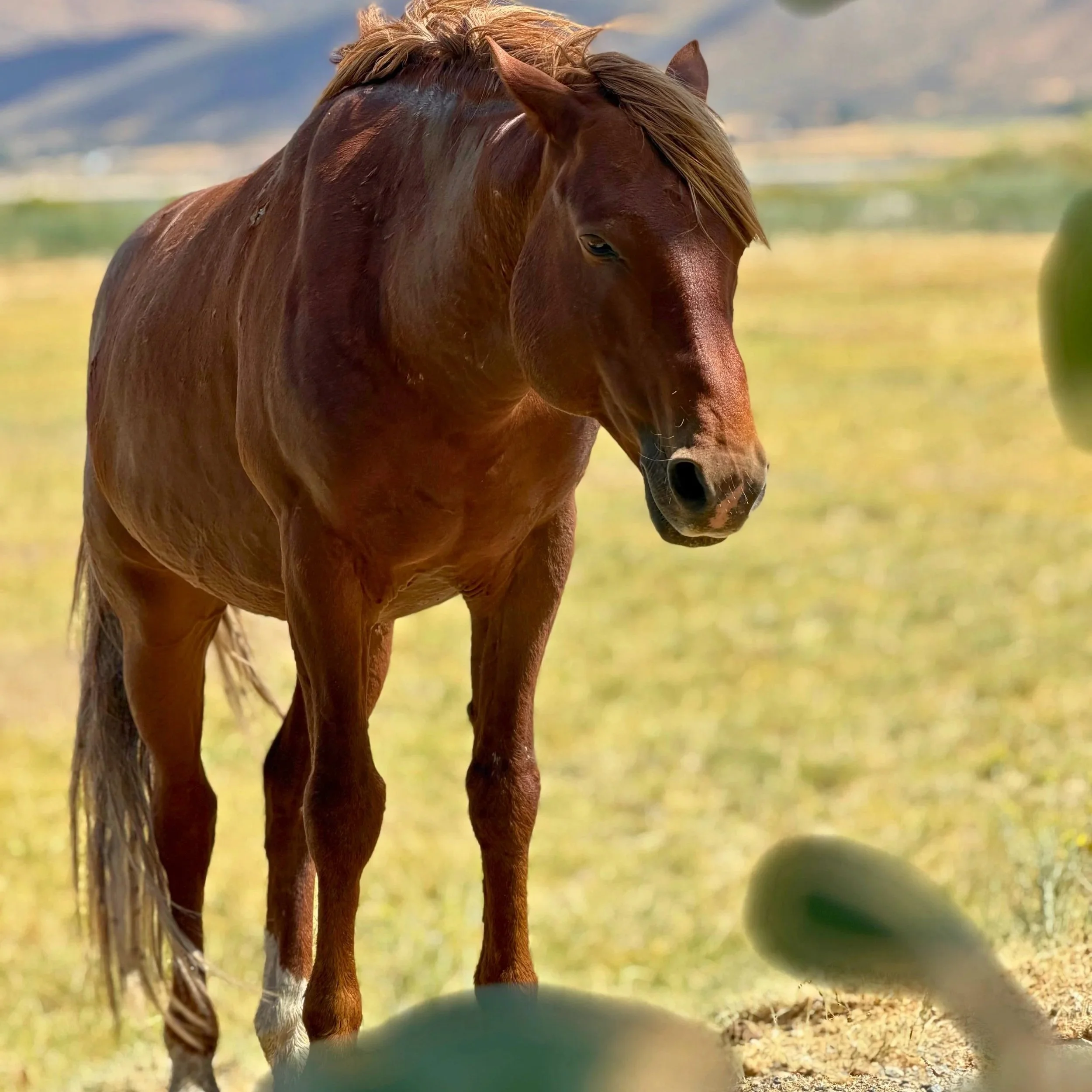
Red
Of everything I witnessed during those three days, however, my most powerful experience came from one horse doing absolutely nothing.
On our second day, the wind was relentless, blowing thirty to forty miles per hour across the open range. The large herd from the day before had disappeared, likely moving into more protected terrain. Through my binoculars, I eventually saw one horse standing alone in the distance.
A stallion.
I hiked about half a mile toward him, stopping far enough away to give him space. I laid my jacket on the ground, sat down, and watched.
I began calling him Red.
Red did almost nothing. He rested. He stood so quietly at times that it looked as though his body might simply tip sideways as he conserved his energy. He swished his tail at flies. Occasionally something in the wind caught his attention and his head would turn. Two or three times, he looked directly at me.
That was it.
There was no profound interaction. No touching. No dramatic moment where a wild horse walked up and chose me.
And perhaps that is exactly why it affected me so deeply.
For much of my early life with horses, there was always something I wanted. Move. Stop. Turn. Lower your head. Go faster. Come here. Stand there.
Even now, as an equine-assisted practitioner, I have to remain conscious of the human tendency to turn the horse into another instrument for our own desired outcome.
But with Red, there was no outcome. I had nothing to ask of him, and he had nothing to ask of me. We simply shared space, and for twenty minutes, that was enough.
As a coach, I have spent years practicing presence. Listening without immediately fixing. Resisting the urge to provide the answer. Allowing another person the dignity of discovering what is true for themselves.
Sitting on the ground with Red, I felt what presence looks like when there is nowhere to go next.
Presence is not doing nothing. Presence is releasing the need for something to happen.
Eventually, two black bachelor stallions that we had seen in the distance began moving toward us. They came galloping across the open ground, and I will admit that for a moment I wondered whether sitting on the ground near three wild stallions had been one of my wiser life choices.
Red immediately noticed them, and when he recognized them, he trotted toward them. They appeared to know one another, and the three stallions moved away together toward the base of the mountain.
I felt an unexpected sadness watching him leave because I thought our time together had come to an end. But underneath the sadness was joy. Red had somewhere to belong. He had companions, and I did not need to be included.
There was another lesson in that.
Connection does not require possession.
Sometimes we are given twenty minutes with another being, and sometimes that is the whole relationship. Sometimes twenty minutes is enough to change us.
The following day, Ryan and I returned to Washoe Lake hoping to find the large herd again. Instead, there were two horses.
One of them was Red.
I will not pretend I know why he returned to that particular place. To say he came back for me would be exactly the kind of human story I am learning not to impose upon horses. But I can tell you what happened inside me when I saw him.
It felt meant to be, as though our first encounter had not quite finished teaching me.
So once again, we shared space.
What the Wild Changed in Me
I believe the greatest gift of those three days was realizing how much I still do not know about horses.
Long before we built barns for them, trimmed their feet, floated their teeth, selected their feed or taught them to perform for us, horses had evolved extraordinary ways of surviving. Their lives are not easy. They carry scars. They fight and play hard. They squeal, separate and reunite. Foals wander away from their mothers. Stallions challenge one another. Mares quietly walk toward better grass. They rest when they can, conserve energy, and respond to what is actually happening around them.
That may have been one of my greatest realizations. I place stories onto horses all the time. I think I know why they moved away, why they pinned their ears, why they chose another horse, why they did not choose me, why they are standing alone, why they are afraid, or why they are happy.
But the truth is, I cannot fully know their inner experience.
Perhaps respecting horses begins there. Not by making them more human, but by becoming more curious about what it means to be a horse.
I went to Nevada hoping to learn about herd dynamics. Instead, I came home thinking about freedom, belonging, leadership, conflict, presence, and the enormous difference between loving another being and needing to control it.
When it was finally time to leave Red, I walked about fifteen feet away from him and stopped. I said, "Goodbye, it was great to meet you. Thank you."
Then, quietly, I sent him all the love I could and one simple wish:
May you remain free.
There was nothing else to do. No halter to put on him. No trailer waiting to take him home. No way to make sure I would ever see him again.
I simply had to leave him there, free.
I spent the first half of my life learning how to make horses respond to me. Now, I find myself much more interested in learning how to listen.
That is what the wild horses came to represent for me. Not horses without humans, but horses without our expectations.
They did not need me to teach them anything. For three extraordinary days, I was simply allowed to witness them.
And as I walked away from Red for the final time, I realized that perhaps one of the deepest forms of love is not asking another being to become anything for us. It is seeing them as they are, being grateful for the time we are given, and, when the time comes, loving them enough to let them remain free.